Sandstone is a sedimentary rock made of sand grains that burial and time have bound into stone. Depending on the minerals it is made of, one sandstone can carry almost three times the load of another before it breaks. Across the eight we extract from our own quarries in Spain, compressive strength runs from 73 to 211 MPa. We explain how sandstone forms, the main types, how it differs from limestone and granite, and which sandstone we recommend for each use.
In this guide: what it is · types · limestone vs sandstone · properties · colours · finishes · paving · cladding and walling · FAQ
What sandstone is and how it forms
A river, the wind or the sea lays down sand in layers over thousands of years. New layers bury the old ones, the weight compacts them, and water moving between the grains leaves behind minerals that act as cement. The result is a rock built from grains between 0.06 and 2 millimetres across, mostly quartz and feldspar, locked together.
The cement that binds the grains can be silica, calcium carbonate or iron oxides. It governs how hard the stone is, how many pores it keeps and much of its colour. Iron oxides, for instance, give the buff, red and orange tones.
As a building material, sandstone is easy to saw and carve, takes a wide range of finishes and has a warm look that shifts from one quarry to the next. Yorkstone, long used for paving and masonry in Britain, is a sandstone.
Types of sandstone
Geologists classify sandstones by what their grains are made of and by the cement that binds them. These are the types that come out of our quarries.
- Quartz arenite. A sandstone in which almost every grain is quartz, the hardest of the minerals commonly found in sand. It is the strongest type in our range in compression. Violet, with its red and violet tones, belongs here.
- Litharenite. Alongside quartz, it holds plenty of fragments of other rocks. Rustic, with a grey base and golden hints, and Northcliff Blue, grey with blue and brown tones, are classified this way in the petrographic study on their technical data sheets.
- Calcarenite. Our name for sandstone whose grains are cemented with calcium carbonate. It is softer than the other two and easier to carve. Clara, Brisa, Duna, Perla and Sunstone make up this group.
In the compression test, the five calcarenites give between 73 and 82 MPa, the litharenite Rustic 86, Northcliff Blue reaches 147 and Violet 211.
Limestone vs sandstone, and where granite fits
What separates the three is how they formed and the minerals they are made of.
| Stone | Rock type | What it is made of |
|---|---|---|
| Sandstone | Clastic sedimentary | Sand grains, mainly quartz and feldspar, held by a mineral cement |
| Limestone | Carbonate sedimentary | Calcium carbonate, often with shell fragments and other marine remains |
| Granite | Igneous | Interlocking crystals of quartz, feldspar and mica, formed as magma cooled at depth |
Limestone and sandstone are both sedimentary rocks and can look alike in colour. What changes is the material they are made of. Sandstone forms from sand grains and limestone from calcium carbonate, which is why Portland stone and Cotswold stone are limestones and Yorkstone is a sandstone. Calcarenites share something with both, since their grain is sand, as in any sandstone, and the cement that binds it is calcareous, as in limestone.
If you are weighing up a British limestone against a Spanish stone, we have published the test data side by side for Portland stone and for Cotswold stone.
In granite, an igneous rock, the crystals interlock with no pore space between grains, and that shows in how little water it takes up. On the data sheets of commercial grey granites from other producers, which are not our stones, water absorption runs from 0.2 to 0.4% and compressive strength from 95 to 222 MPa. Violet, at 211 MPa, and Northcliff Blue, at 147 MPa with 0.8% absorption, fall inside that compressive range while being sandstones.
If limestone, travertine or marble is what you are after, we work those too within Rubio Selection.
Technical properties of sandstone
A handful of tests sum up how a sandstone will behave once it is laid or fixed.
- Compressive strength. The load a specimen takes before it crushes, in megapascals (MPa). It is the reference figure for ashlar, piers and paving under load.
- Flexural strength. The piece is supported at both ends and loaded in the middle until it breaks. It matters for paving slabs, steps and cladding panels, which work in exactly that way.
- Open porosity and water absorption. The share of pores connected to the outside, and the water the stone ends up taking in. The less water gets in, the less there is inside when it freezes.
- Frost resistance. The stone goes through 56 freeze-thaw cycles and its flexural strength is measured again afterwards.
These are the values on the technical data sheets of our sandstones.
| Sandstone | Type | Compressive (MPa) | Flexural (MPa) | Open porosity or absorption (%) |
|---|---|---|---|---|
| Clara | Calcarenite | 77 | 9.7 | 12.5 (porosity) |
| Brisa | Calcarenite | 82 | 9.7 | 12.4 (porosity) |
| Duna, Perla and Sunstone | Calcarenite | 73 | 8.5 | 12.6 (porosity) |
| Rustic | Litharenite | 86 | 10.5 | 9.9 (porosity) |
| Violet | Quartz arenite | 211 | 19.1 (perpendicular to bedding) and 14.0 (parallel) | 3.7 (porosity) and 1.0 (absorption) |
| Northcliff Blue | Litharenite | 147 | 23.3 | 0.8 (absorption) |
Duna, Perla and Sunstone share their test values, so the choice between them is one of colour.
In the freeze-thaw test, the five calcarenites and Rustic lose less than 1 MPa of flexural strength and Northcliff Blue loses none. Violet gives 12.7 MPa after the cycles, against 19.1 and 14.0 MPa beforehand depending on the load direction. Its data sheet does not state the direction of that 12.7. The full table, stone by stone, is in the pool coping article.
Grip underfoot depends more on the finish than on the stone, and we cover it in the guide to natural stone finishes.
Sandstone colours
The range runs from near-white beige to blue-grey, by way of buffs, pinks and violets. Across our quarries it breaks down like this.
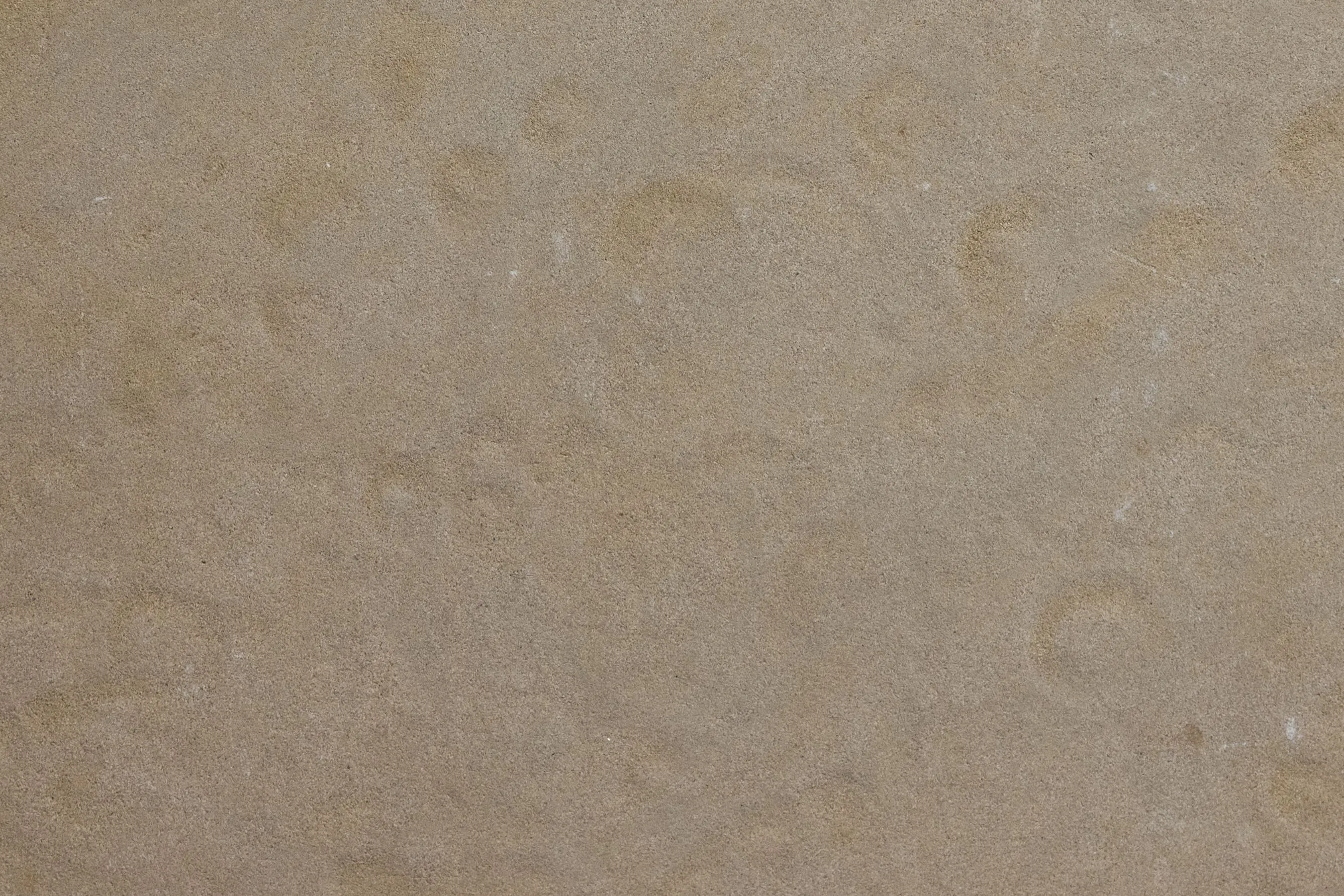
- Beiges and creams. Clara is a light beige with a very fine, even grain. Brisa is a darker beige with cream veining. Perla is cream.
- Buffs and pinks. Duna is a warm buff with orange hints. Sunstone mixes pink and yellow tones.
- Greys. Rustic has a grey base with golden hints. Northcliff Blue is grey with blue and brown tones.
- Reds. Violet brings together red and violet tones.
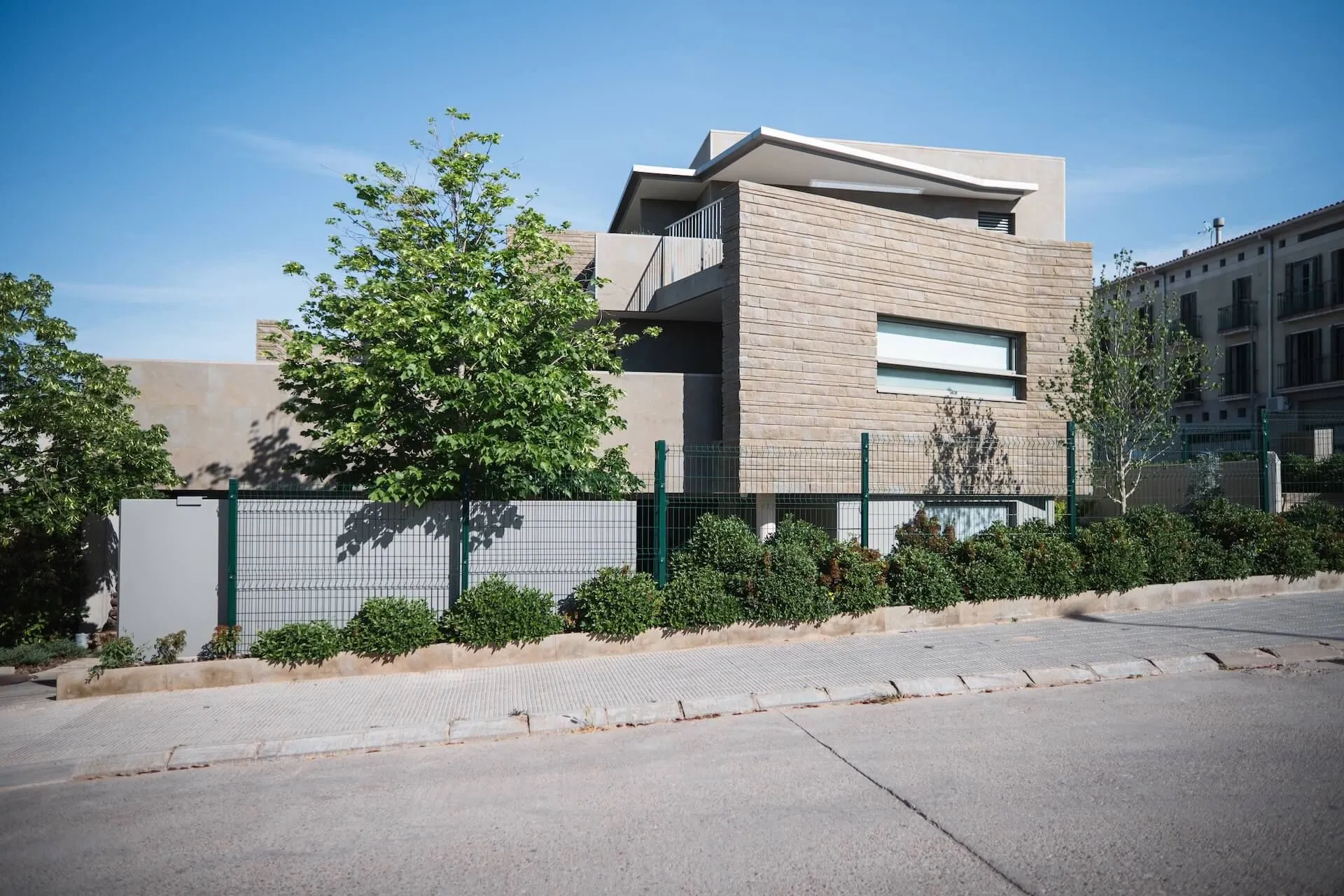
Being a natural material, tone and veining vary from block to block. A physical sample tells you more than any photograph.
Sandstone finishes
The same sandstone changes in look and feel with the treatment given to its face. The smooth finishes, sawn and honed, leave a matte, even surface. Sandblasted and bush-hammered add texture and grip for outdoor use. The hand-tooled finishes belong to restoration work and exposed masonry.
The finishes available depend on the stone. In our 2026 catalogue, Clara, Brisa, Duna, Perla, Sunstone and Rustic take every finish except flamed, including the Rubio’s Special family. Violet and Northcliff Blue come in five: sawn, honed, brushed, fine bush-hammered and flamed, which is produced by thermal shock.
Each finish is explained in the finishes guide, and you can see every texture on the finishes page.
Sandstone paving
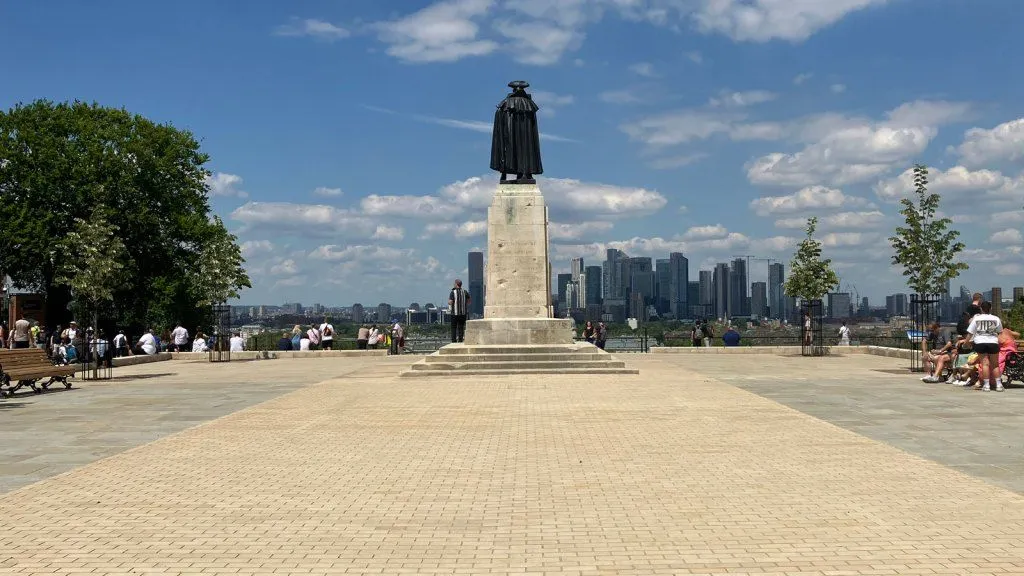
Outdoors, paving is rained on, walked on and, through a British winter, frozen and thawed many times over. Water absorption and flexural strength after freeze-thaw are therefore the first two figures to look for on a data sheet.
For terraces, gardens and squares we recommend Rustic, a litharenite at 86 MPa in compression. Where there is heavy traffic or hard frost we propose Northcliff Blue, at 0.8% water absorption and 23.3 MPa in flexure. In Greenwich Park, the new paving laid during the 2024 restoration is in Duna setts.
If you are comparing against imported or British sandstone paving, the test data is set out side by side in our comparisons with Indian sandstone and with Crosland Hill, Scoutmoor and Woodkirk Yorkstone.
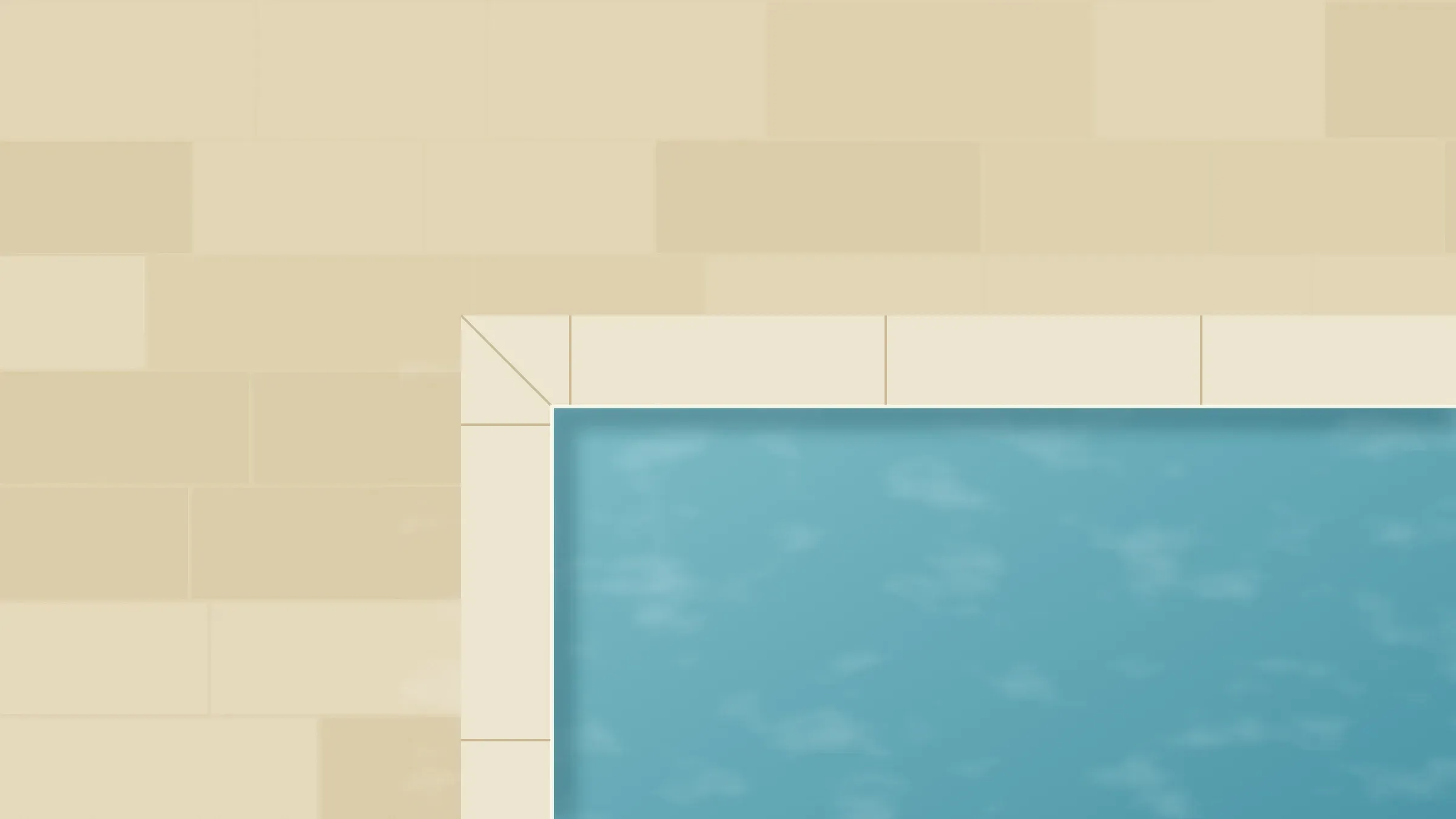
Around a pool people walk barefoot on wet stone, so the finish counts as much as the variety. The swimming pool guide goes through deck, coping and shell.
Sandstone cladding, walling and masonry
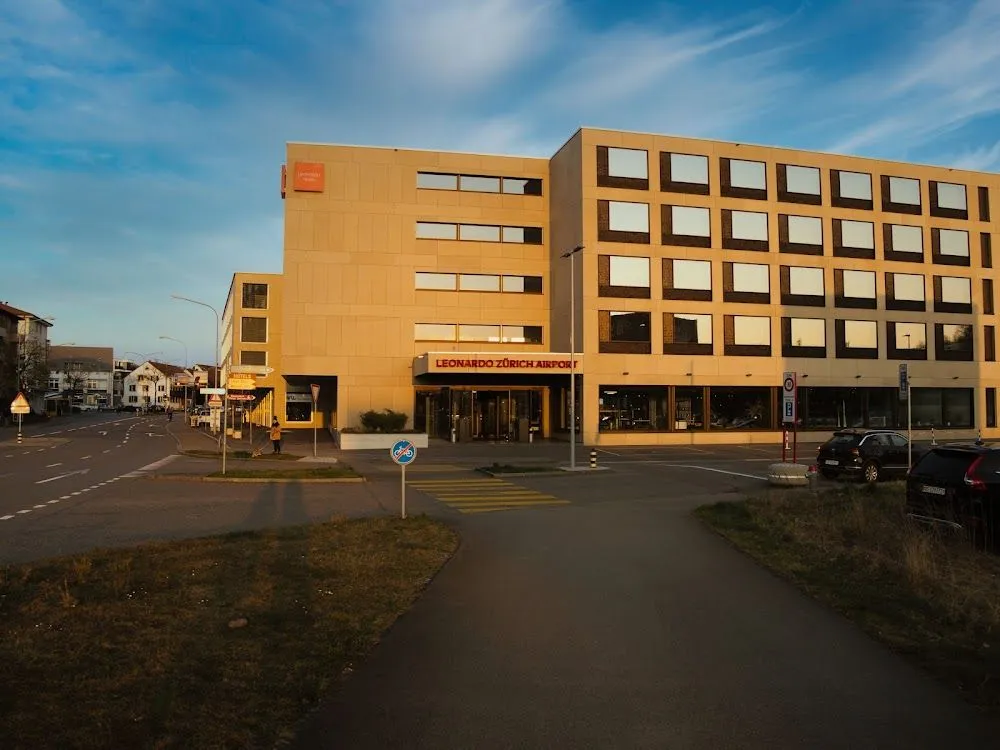
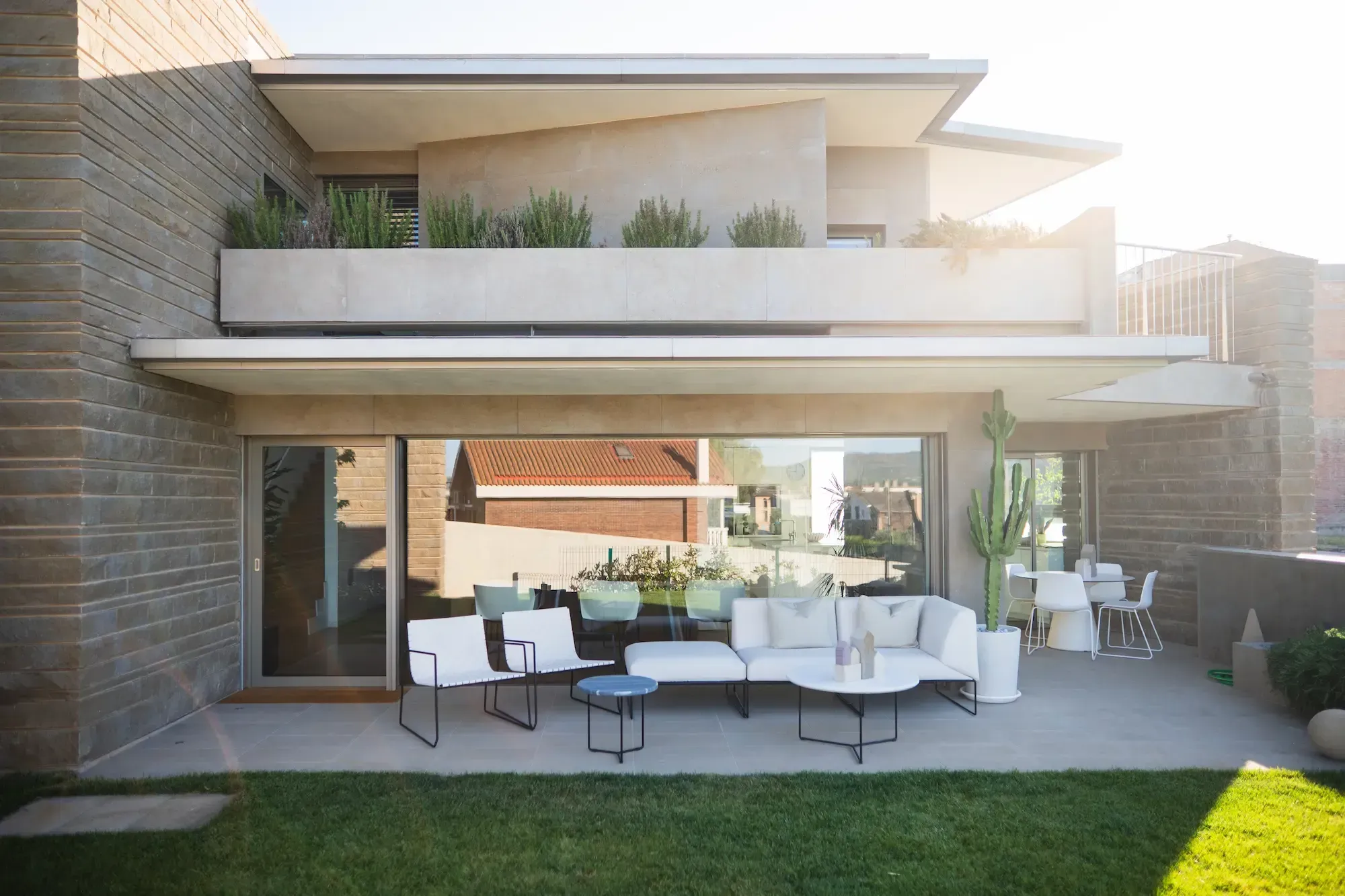
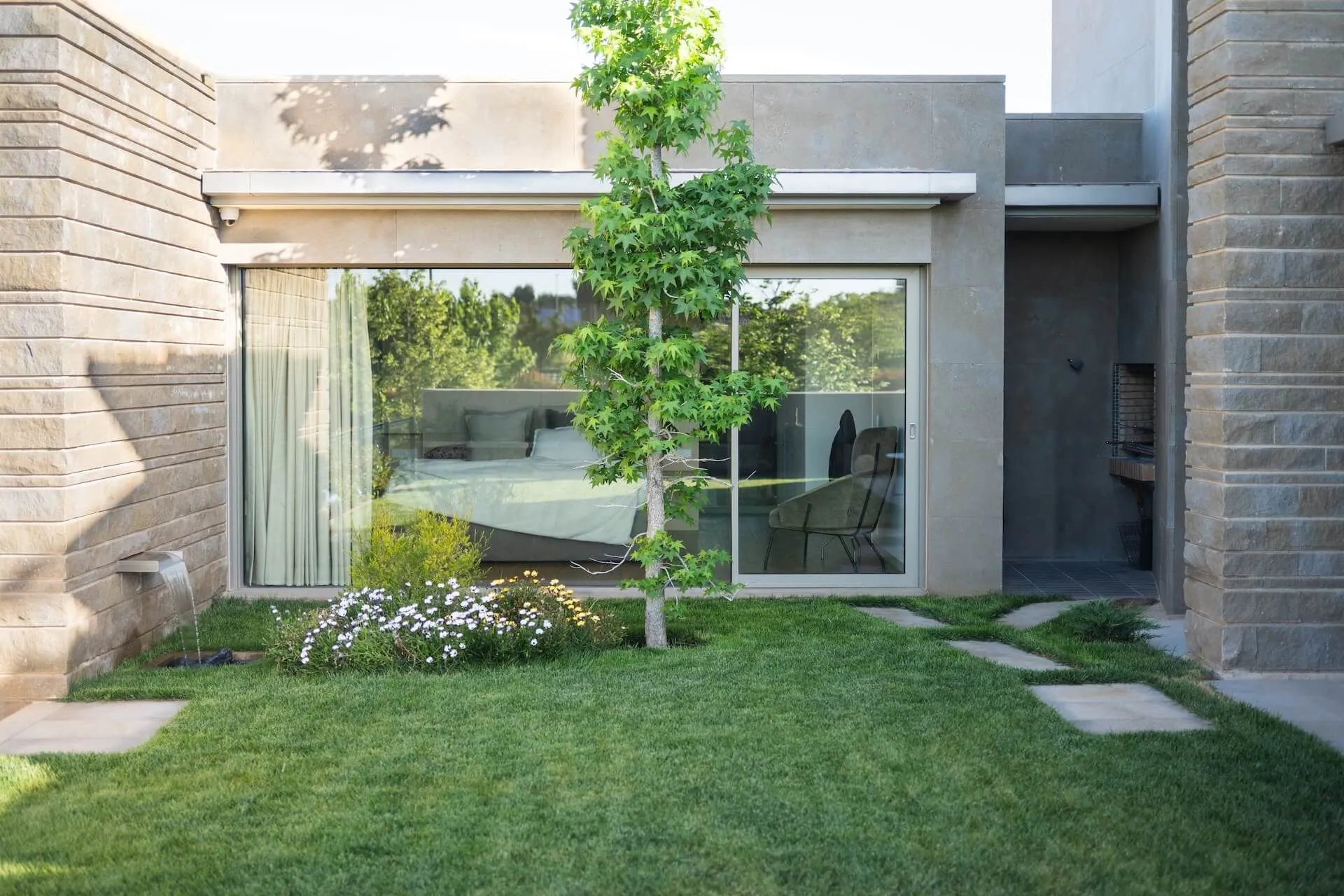
On a facade the panel works in bending and at the point where the fixing holds it, so flexural strength and breaking load at the dowel hole are the reference tests. Natural stone is also non-combustible, classified A1 for reaction to fire without the need for testing.
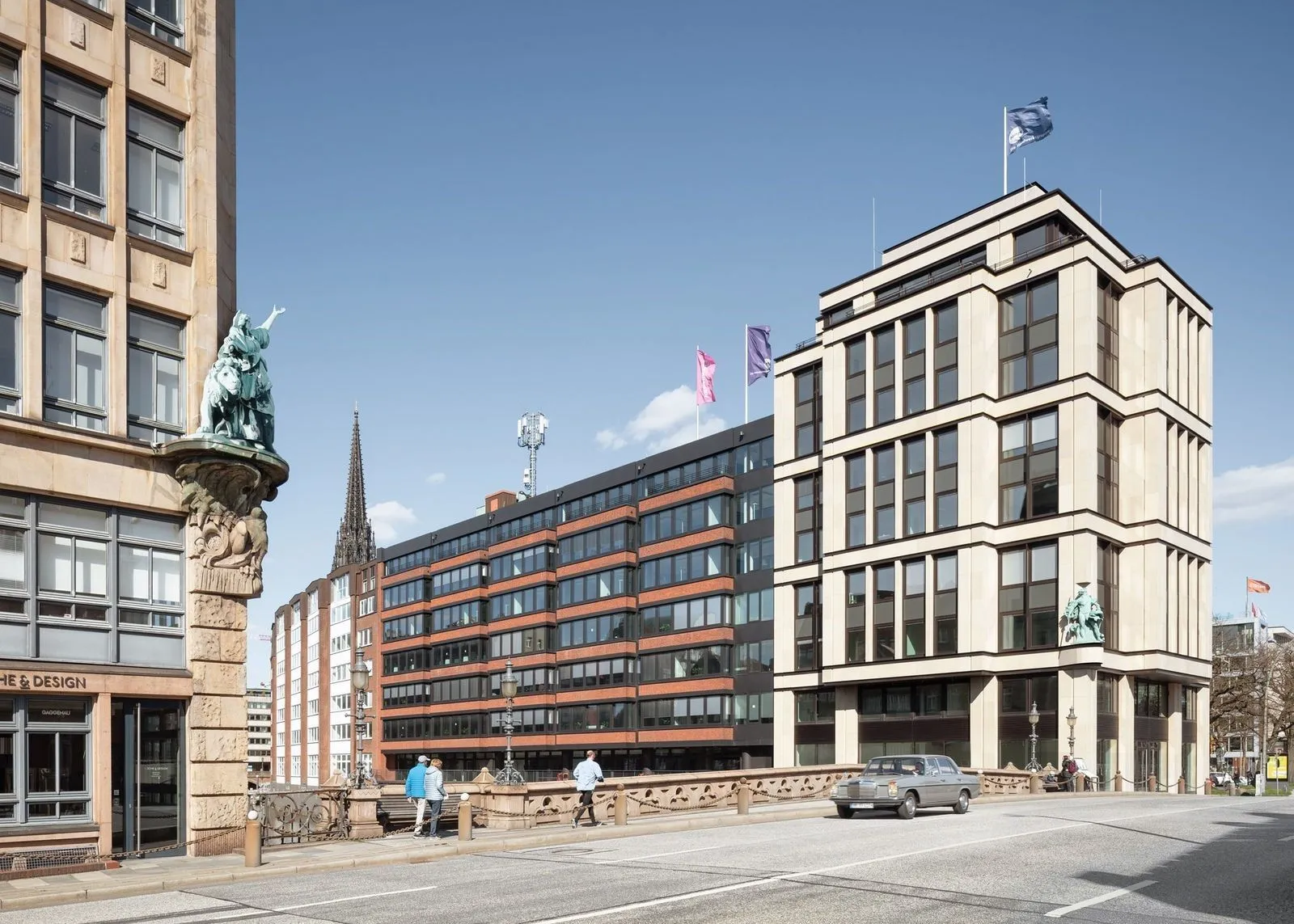
Clara clads the Leonardo Hotel Zürich Airport and the Cremon building in the old centre of Hamburg. Bush-hammered Perla covers the facade of the ME Barcelona hotel. System, standards and detailing are in the guide to natural stone ventilated facades.
For ashlar and load-bearing walls we recommend Brisa, at 82 MPa in compression. Clara is used for carved capitals, balusters and large mouldings. In restoration, where new stone has to sit alongside the original, Sunstone and Clara are the two we propose.
Frequently asked questions
What type of rock is sandstone?
It is a clastic sedimentary rock. It forms when layers of sand are buried and compacted, and their grains, mostly quartz and feldspar, are bound by a cement of silica, carbonate or iron oxides.
What is the difference between limestone and sandstone?
Sandstone is made of cemented sand grains and limestone of calcium carbonate. Both are sedimentary and can share similar colours. Sandstones with a calcareous cement, like our calcarenites, have traits of each.
Is sandstone good for paving?
It depends on the type. For outdoor paving, look at water absorption and at flexural strength after freeze-thaw. Northcliff Blue absorbs 0.8% and keeps its full flexural strength after 56 cycles. For terraces and gardens, our recommendation is Rustic.
Is sandstone a strong stone?
Some types far more than others. In our compression tests, the calcarenites give 73 to 82 MPa, the litharenites Rustic 86 MPa and Northcliff Blue 147 MPa and the quartz arenite Violet 211 MPa, within the range of commercial grey granites.
Is sandstone porous?
Clara has an open porosity of 12.5% and Rustic of 9.9%, while Violet absorbs 1.0% of water and Northcliff Blue 0.8%. Where winters bring frost, that figure is the one to choose by.
Is sandstone frost resistant?
It is checked stone by stone with a 56-cycle freeze-thaw test. In it, our calcarenites and Rustic drop by under 1 MPa in flexure and Northcliff Blue holds its value. Violet ends at 12.7 MPa. For frost-prone or mountain climates we propose Northcliff Blue.
Data sheets and samples for each sandstone
The technical data sheet for each stone, with the tests in this guide and the remaining values, is available from its page. We are a family company with roots going back to 1950. We extract the sandstone from our own quarries in Aragon and Catalonia and cut and finish it in Les Borges Blanques, in north-east Spain, without firing or additives, as set out on our sustainability page. Tell us what the stone is for and the climate it will face, and we will propose a stone and a finish, with samples of both.