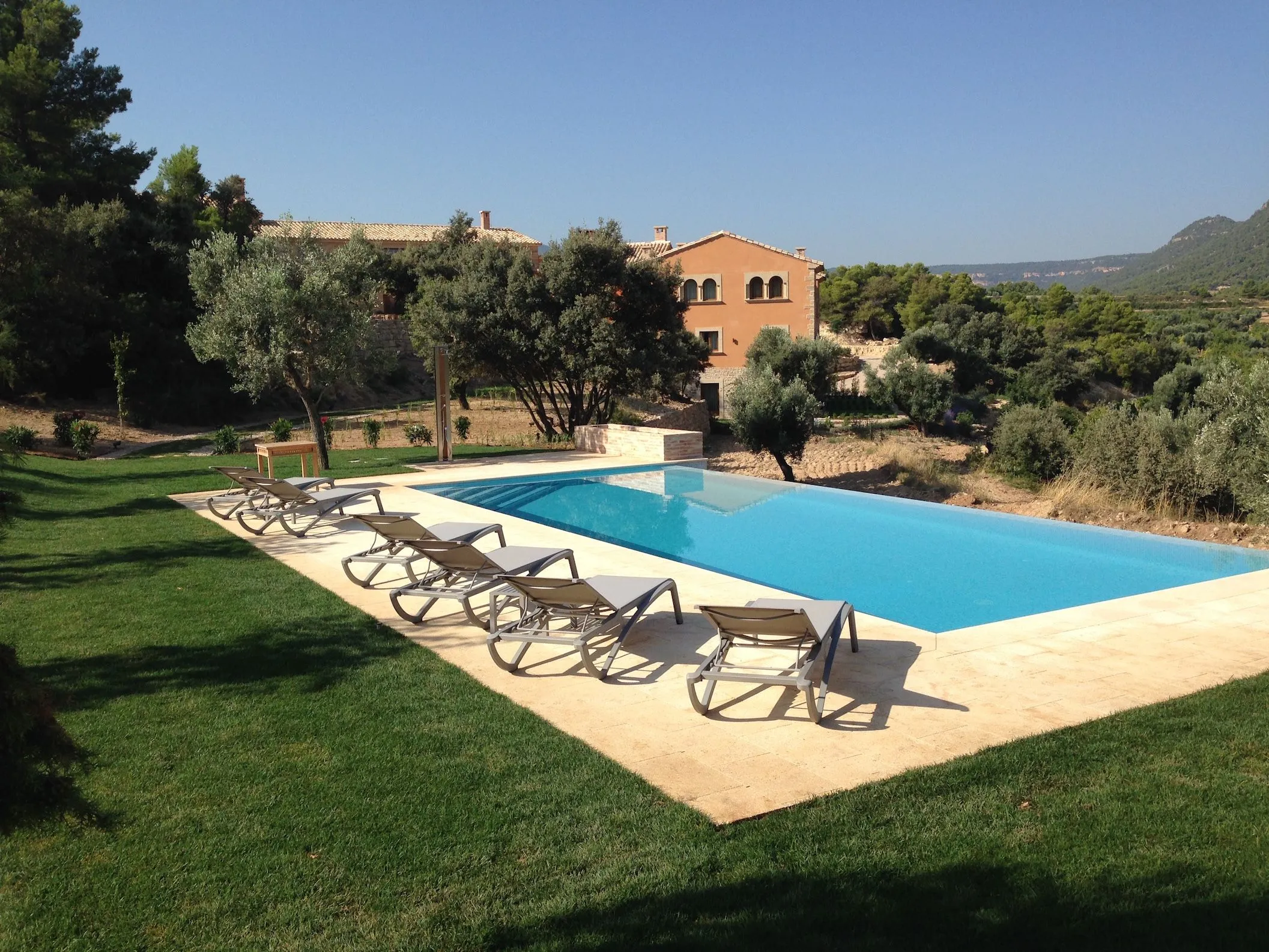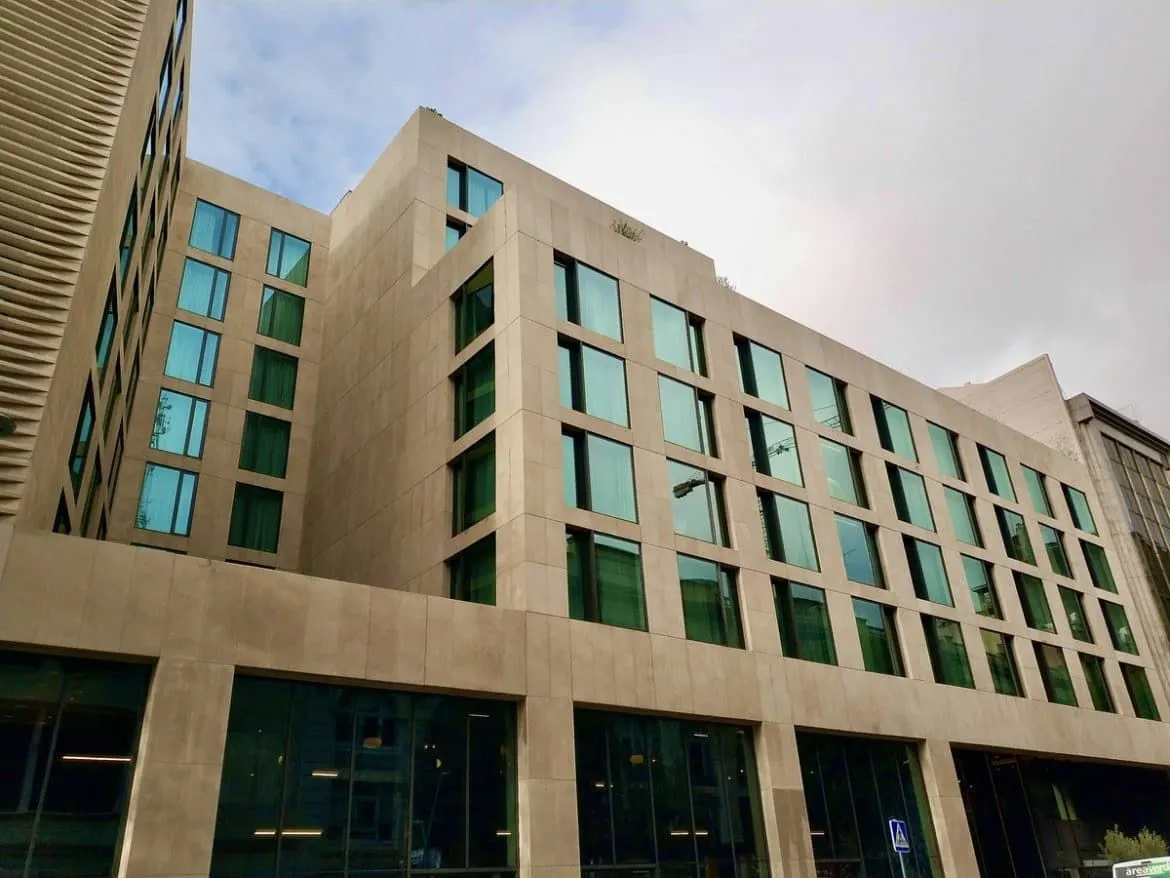
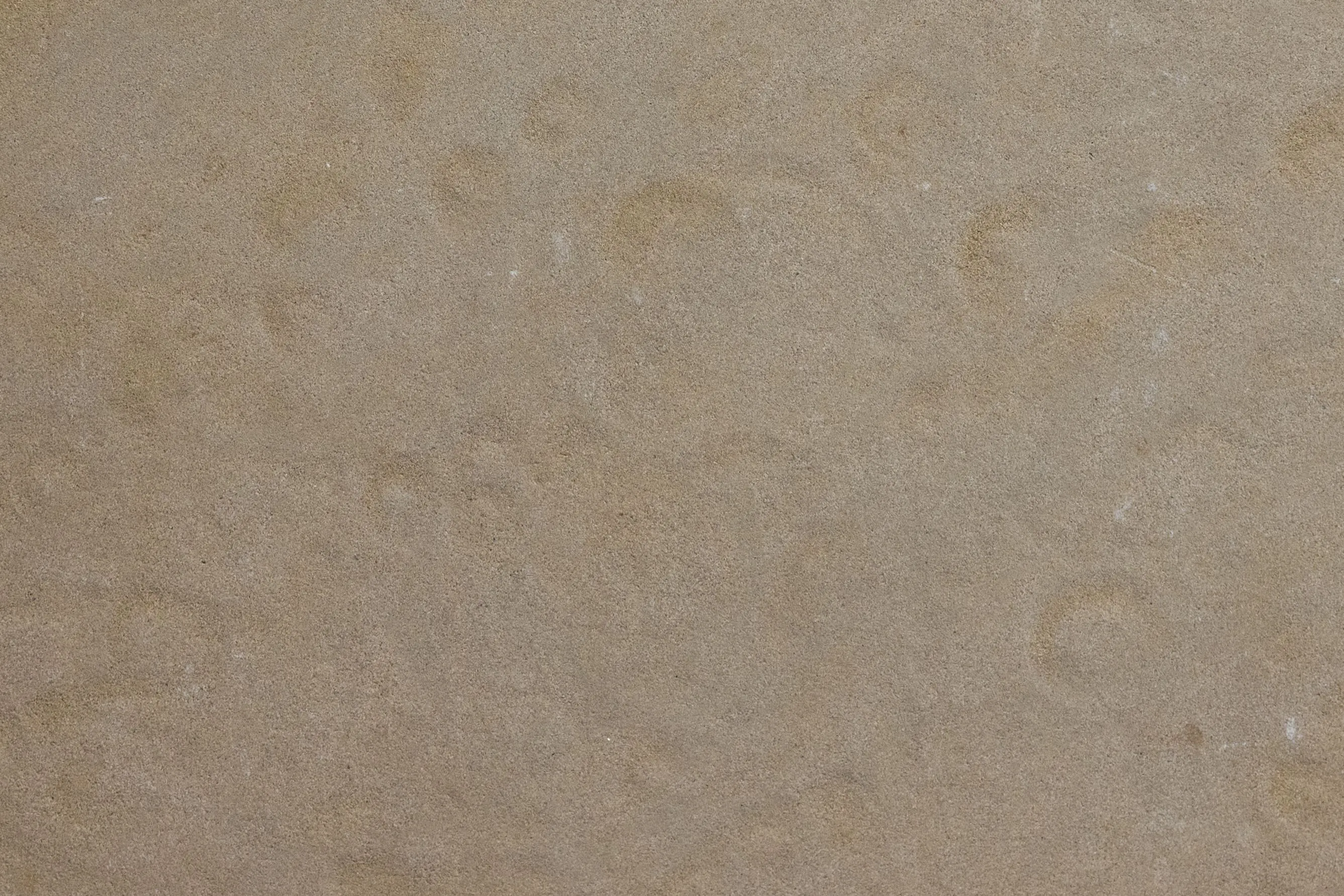
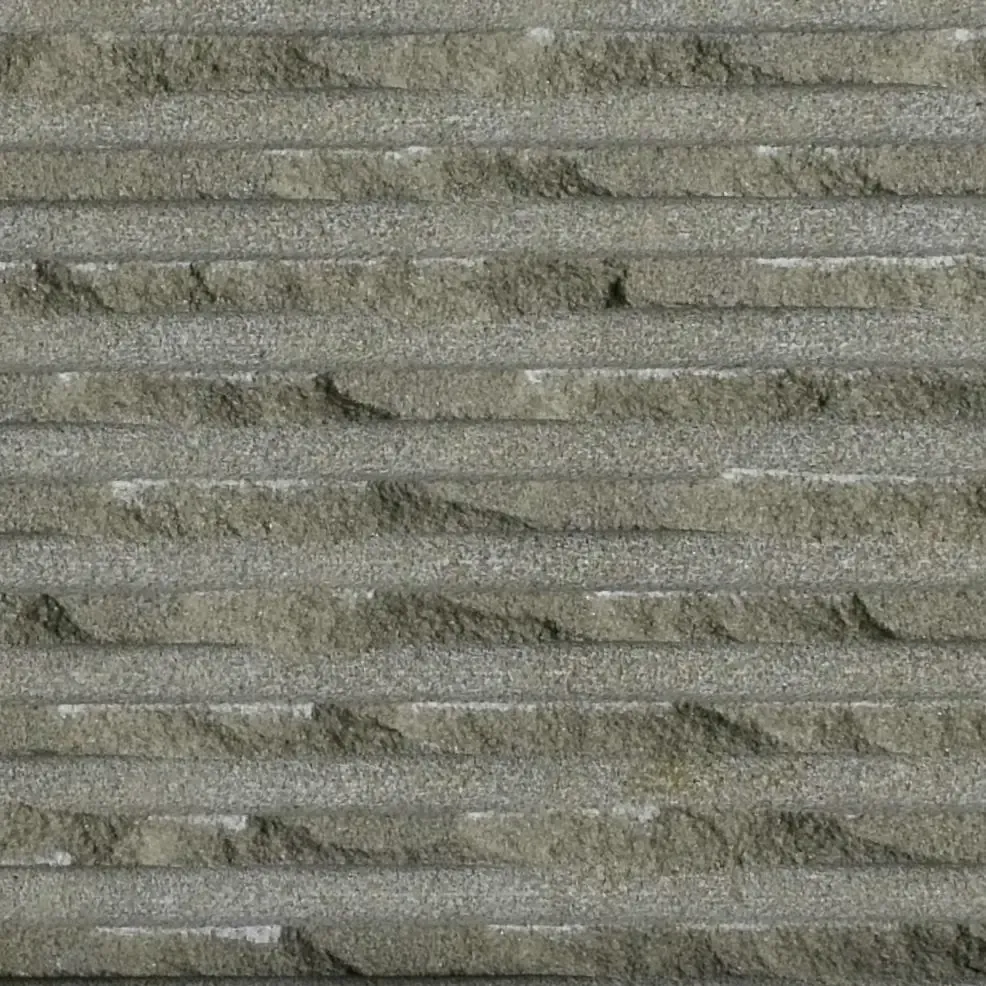
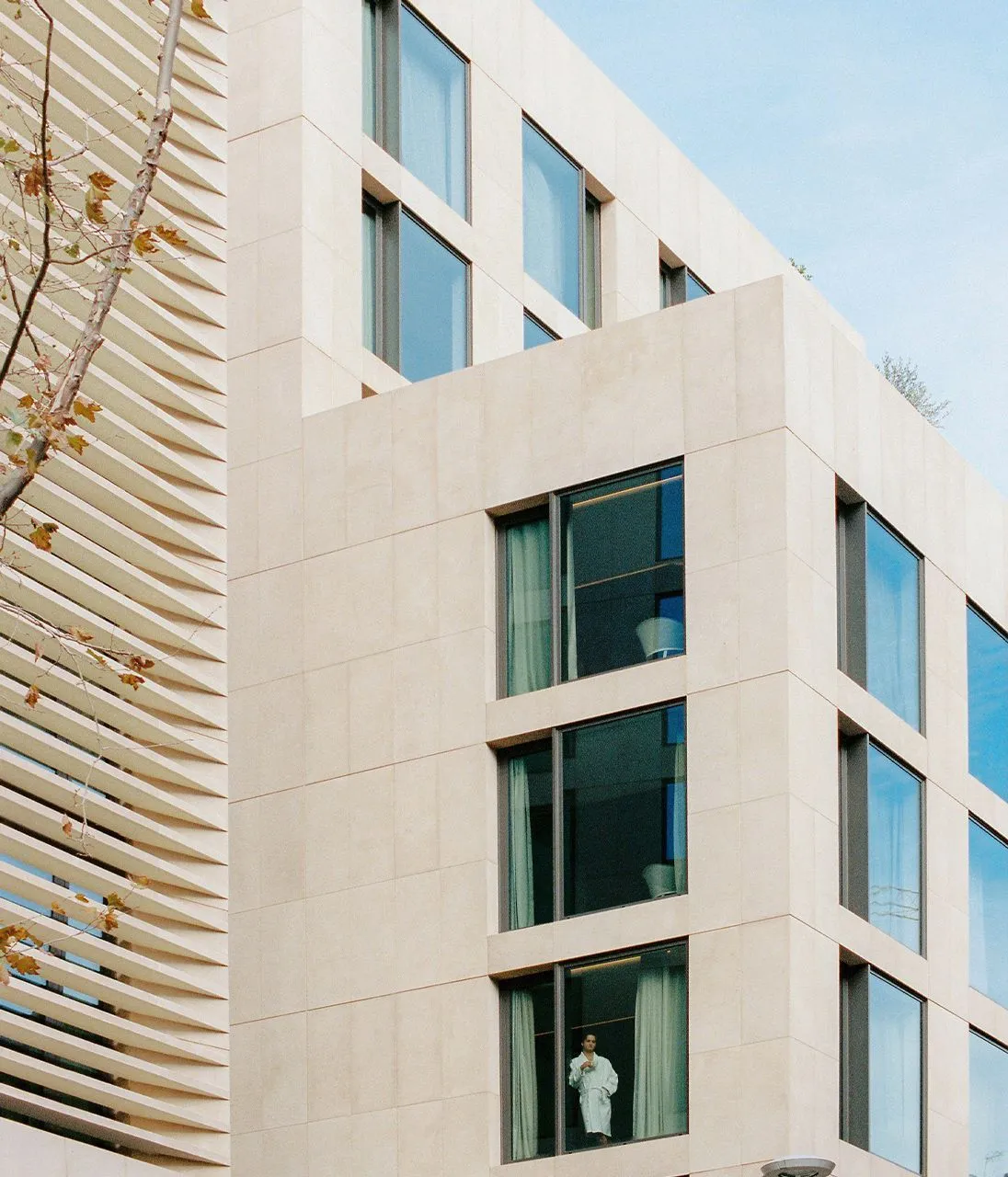
The same stone can produce surfaces that look like different materials. Brisa sandstone in our Stripped finish has little in common with the honed Brisa on the Waldorf Astoria facade, yet both come out of the same block. That leap is the finish, which sets the texture, the light and the grip of the final piece. Here are the finish families we produce, the slip rating each area demands and which stones take which finish.
In this guide: what the finish changes · smooth · anti-slip · artisan · slip standards · stone by finish · how to decide · FAQ
What the finish changes in the stone
A finish is the treatment the visible face of the piece receives after cutting. It changes the texture, the apparent tone and how the surface behaves underfoot, and it does so without touching what the stone is inside. Density, strength and water absorption come from the variety; what you see and touch comes from the finish.
Of those three, grip is the one that varies most with conditions. It is measured with the pendulum test, the instrument slip-resistance codes rely on: a rubber slider swings across the surface and the reading shows how much the stone brakes it, so the higher the value, the more grip. Readings of 36 or more indicate low slip potential, and outdoor paving should sit comfortably above that. In our test sheets, Clara reads 96 dry and 82 wet, Brisa goes from 97 to 83, and Duna, Perla and Sunstone from 94 to 78. Every surface loses grip when wet, 8 to 16 points in our sandstones, and that drop is what the right finish makes up for on outdoor paving, in a bathroom or on a stair.
Smooth natural stone finishes

Sawn is the surface just as it leaves the saw, smooth and matte, with no further treatment. It works as a neutral base and also as a final finish in projects that want the least possible intervention on the material.
Honed adds a gentle abrasive pass that leaves the face even, sober and pleasant to the touch. It is the finish we repeat most in hospitality and high-end residential work. The Waldorf Astoria was resolved in honed Brisa in large format, and the Meliá Bin Shamikh in honed Clara in 120 by 60 centimetre pieces.
Brushed softens the surface with a mechanical pass that brings out the veining and leaves a silky touch. The 2026 catalogue documents it on Rustic, where the grey-gold grain gains depth.
Polished takes the abrasion up to a shine. Indoors it gives the most formal image in the repertoire; on outdoor paving we advise against it in our own finishes guide, because the shine is paid for in grip as soon as the surface gets wet, and its maintenance is the most demanding of the range.
Anti-slip finishes for outdoor paving
Sandblasted is produced with a sand jet and leaves a fine, organic-looking relief. It is the most discreet of the textured finishes, the usual choice when outdoor paving needs grip without the texture taking over.
Bush-hammered is worked with a bush hammer and leaves the face stippled. We produce it in three grades, from fine to coarse, and that gradation lets you adjust the grip zone by zone without changing stone or colour: fine on the covered terrace, coarser where it rains and gets walked on. It performs on vertical surfaces too. The ME Barcelona hotel carries bush-hammered Perla in pieces of up to 2.40 by 1 metre right on its Passeig de Gràcia facade.
Flamed comes from a thermal shock that spalls the surface layer and leaves the face rough. We only apply it to Violet and Northcliff Blue, the two stones in the catalogue hard enough to withstand it, which is why it is the natural finish for the most demanding paving.
Artisan stonemasonry finishes
Chiselled has a handworked look and is the usual choice in restoration, where the new piece has to live alongside centuries of hand craft. Split-face leaves the surface coarse and broken; it is the finish of exposed masonry and rustic walls. Aged, which the catalogue documents on Rustic setts, goes for the look of stone with years of use from day one.
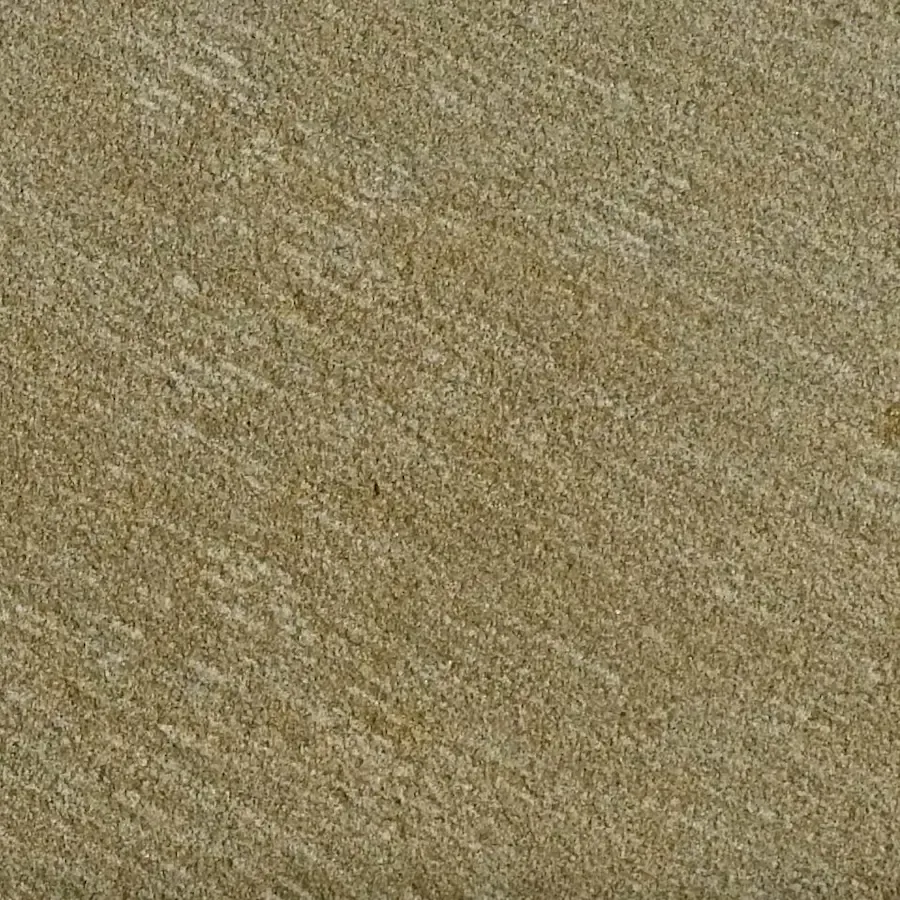
The Rubio’s Special family gathers the finishes exclusive to our factory, such as Antik, Carved and Stripped. Antik brings a soft relief with a Mediterranean air, and Stripped is responsible for the transformation of the Brisa that opens this guide. They are finishes of our six calcarenites and are not applied to the quartz sandstones.
The slip rating each area demands
Slip requirements change name from country to country, and the logic repeats: the wetter and more exposed the area, the higher the rating it demands. The international references are the pendulum (PTV), the DIN 51130 R-values for shod areas and the DIN 51097 classes for barefoot zones.
In Spain, the building code (CTE DB-SUA 1) grades floors from Class 0 to Class 3 on the pendulum scale and demands the top class outdoors, in showers and around pools. Its supporting document, DA DB-SUA/3, goes further and lists natural stone floors in flamed and bush-hammered finishes as safe against slipping without testing, provided the visible face is not altered afterwards, for example by polishing. For a project in Spain, either finish complies by definition, with no batch-by-batch test.
Pool surrounds have their own barefoot classes, coping and details, and we cover them in depth in the natural stone for swimming pools guide.
Which finishes each stone accepts
Every finish asks something of the stone that receives it, and the matrix in our catalogue reflects that.
| Stones | Available finishes | The reason |
|---|---|---|
| The six calcarenites (Clara, Brisa, Duna, Perla, Sunstone, Rustic) | Sawn, honed, sandblasted, bush-hammered, brushed, chiselled, split-face and the whole Rubio’s Special family | Their calcareous grain takes hand work and soft reliefs |
| Violet and Northcliff Blue | A shorter set that includes flamed | Only their hardness withstands the thermal shock of flaming |
In practice, the table works both ways. If you want a flamed finish, the stone will be Violet or Northcliff Blue. If you want one of the Rubio’s Special family, it will be a calcarenite. And on the common ground, honed, sandblasted or bush-hammered, you choose the stone first for its data and colour, and then the finish for the area.
How to choose a finish for each use
- Will it be walked on and get wet? Start from the slip rating that area demands and stay in textured territory: medium or coarse bush-hammered, flamed if the stone is Violet or Northcliff Blue, sandblasted if you want the most restrained texture.
- Is it a facade or cladding? Grip stops ruling and light, format and viewing distance decide. Our documented facades split between honed and bush-hammered in large format.
- Will it be seen and touched up close? Indoors, honed and brushed give the most refined touch; in restoration and projects with history, chiselled, split-face and the Rubio’s Special finishes bring the character.
On maintenance, our finishes guide is clear: sawn, honed and flamed sit in the low band; polished, in the high one. And whatever the choice, ask for the sample in the finish that will go to site. Between grades of bush-hammering, or between sandblasted and brushed, the decision is made with the piece in front of you.
Frequently asked questions
Which finish is best for outdoor natural stone paving?
A textured one. Bush-hammered in a medium or coarse grade and flamed give the surest wet grip, to the point that Spanish regulation deems them safe without testing, and sandblasted adds grip with the most discreet texture. Flamed is reserved for Violet and Northcliff Blue.
What is the difference between honed and polished?
Both start from abrading the surface. Honed stops at a smooth, matte face, valid for almost any use; polished continues up to a shine, gains presence indoors and loses grip as soon as it gets wet, which is why it is advised against outdoors.
Do all finishes work on any stone?
No. Flamed demands the hardness of the quartz sandstones Violet and Northcliff Blue, and the Rubio’s Special family is exclusive to the six calcarenites. The rest of the repertoire, from sawn to bush-hammered, covers practically the whole range.
What does the pendulum test measure?
How much a surface brakes a rubber slider swinging across it, expressed as a Pendulum Test Value. Readings of 36 or more indicate low slip potential; our sandstones test between 78 and 85 wet, which is why they are specified for outdoor paving and pool surrounds.
Which finish needs the least maintenance?
Sawn, honed and flamed sit in the low-maintenance band of our guide; sandblasted and bush-hammered, in the middle. Polished is the most demanding, above all on surfaces in daily use.
We’ll prepare your sample
We quarry the block, cut it and apply the finish at our facility in Les Borges Blanques, so each piece reaches site with the surface already resolved. Tell us which area you are working on and with which stone, and the samples leave the factory in that finish. The full range, with photos of every texture, is at finishes.